
Thales takes new HF communications system from ship to shore
Products & Services
Shephard Plus Update
Shephard Media
Shephard Plus is updating in June 2018 with rich new capabilities, and is now one of the most cost-effective and valuable aerospace and defence market intell...
Military Unmanned Systems Handbook
Shephard Media
The Military Unmanned Systems Handbook (Digital Download) is an international guide to the military UV industry and provides detailed information on air, ground and sea (surface & sub-sea) vehicles as well as subsystems. What's included: Unencrypted 390+ page PDF of equipment and supplier information Market summary
Defence Insight
Shephard Media
Some of the things people like you use Defence Insight for:
- Total addressable market sizing ($)
- Competitor analysis
- Cost analysis
- Market forecasting
- Growth identification
- Increasing closing ratio
- Increasing closing order value
- Estimating product potential
- Calculating sales forecasting
- Supply and demand analysis
- Total addressable market sizing ($)
- Competitor analysis
- Cost analysis
- Market forecasting
- Growth identification
- Increasing closing ratio
- Increasing closing order value
- Estimating product potential
- Calculating sales forecasting
- Supply and demand analysis


Description
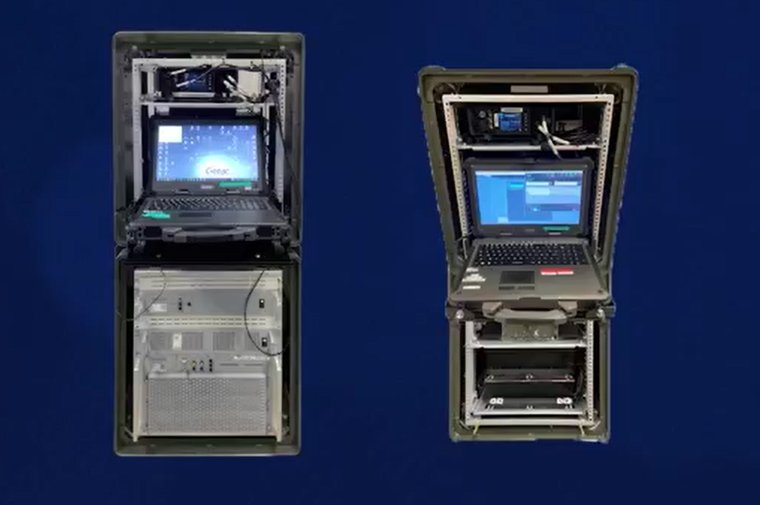
Thales has taken its naval HF technology and developed it for base and command operations under a family dubbed HF XL. Next year, the company plans to introduce smaller versions of the system for vehicle and soldier applications in 2025.
The larger headquarters HF XL is 1kW and the smaller command post has been described as 400W, while the future vehicle system is 125W and the soldier-borne version is 40w. Plans have been underway to extend HF XL technology into the aero and infrastructure domains.
The new HF radios use technology that is already deployed aboard several types of French warships including FDI-class defence and intervention frigates and the Charles de Gaulle aircraft carrier, with the company stating it has delivered more than 100 systems.
The company has argued the case for HF in a satellite-denied environment, as a back-up to satellite communications or as a national asset over the use of commercially provided satellite communications.
The company stated that HF XL was supported by a “cognitive engine that automatically selects frequencies throughout the communication [and] jammed frequencies are automatically rejected and replaced by free frequencies, ensuring link stability and optimised data rates”.
The company also said: “[Using this backbone] we are offering a 10-fold increase in bandwidth and a significant improvement in quality of service, while still benefiting from HF's advantages of long range and operation in constrained environments.”
The 1kW and 400W radios have been designed to be interoperable with all wideband HF radios and enable deployed command posts to communicate with command headquarters or with other units in remote areas of the theatre of operations, over distances of up to 10,000km.
The larger headquarters HF XL is 1kW and the smaller command post has been described as 400W, while the future vehicle system is 125W and the soldier-borne version is 40w. Plans have been underway to extend HF XL technology into the aero and infrastructure domains.
The new HF radios use technology that is already deployed aboard several types of French warships including FDI-class defence and intervention frigates and the Charles de Gaulle aircraft carrier, with the company stating it has delivered more than 100 systems.
The company has argued the case for HF in a satellite-denied environment, as a back-up to satellite communications or as a national asset over the use of commercially provided satellite communications.
The company stated that HF XL was supported by a “cognitive engine that automatically selects frequencies throughout the communication [and] jammed frequencies are automatically rejected and replaced by free frequencies, ensuring link stability and optimised data rates”.
The company also said: “[Using this backbone] we are offering a 10-fold increase in bandwidth and a significant improvement in quality of service, while still benefiting from HF's advantages of long range and operation in constrained environments.”
The 1kW and 400W radios have been designed to be interoperable with all wideband HF radios and enable deployed command posts to communicate with command headquarters or with other units in remote areas of the theatre of operations, over distances of up to 10,000km.


