See us at ILA Berlin 2026 : HALL A|500
Whisper Aero Targets Defense First For Ultraquiet Electric Propulsion
Products & Services
Home - Aviation Group Marketing
Aviation Week Network
120 data points on over 156,000 commercial and business aviation aircraft, including military transports. Discover the most trustworthy resource for the complete aircraft history, plus ad hoc reports, month-over-month trend analysis and details on expected deliveries through 2050.
Aerospace | Aviation Week Network
Aviation Week Network
https://aviationweek.com/themes/custom/particle/dist/app-drupal/assets/awn-logo.svg
People
Andrea Rossi Prudente
Aviation Week Network

Anthony Lim
Aviation Week Network
Sales director
Becca Balmes
Aviation Week Network
Belinda Tan
Aviation Week Network
Brian Everstine
Aviation Week Network
Editor

Eddie Krankowski
Aviation Week Network
Assistant Manager, Tradeshows
erving dockery
Aviation Week Network
Lisa Tan
Aviation Week Network
Senior Marketing Manager
Mark Thomas
Aviation Week Network
Description
Electric aviation is in its infancy, equivalent to the piston era of a century ago. But propulsion startup Whisper Aero is already working to enable the transition from the propeller age to the jet age by developing ultraquiet, ultraefficient electric ducted fans.
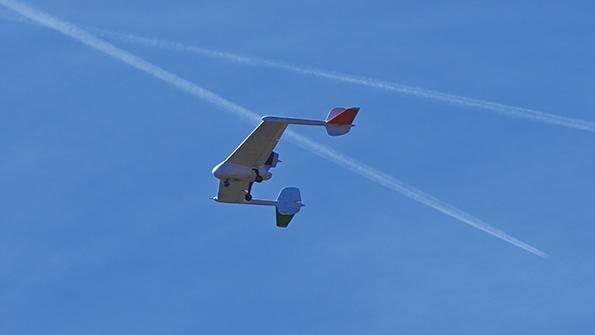
Based in Crossville, Tennessee, Whisper Aero has raised $32 million in Series A funding to grow its team and launch production, initially targeting U.S. Defense Department applications such as intelligence, surveillance and reconnaissance (ISR) uncrewed aircraft that are inaudible from the ground. Electric ducted fans combine low noise with high efficiency Class 2 surveillance drone inaudible flying over at 200 ft. Potential for application to larger, faster aircraft
The startup has validated its technology with flights of a custom-designed 55-lb. ISR drone powered by a single 10-lb.-thrust demonstrator propulsor. Flying over at about 200 ft., the Whisper drone could not be acoustically detected by a ground observer but the 2-lb. multicopter chase drone could clearly be heard at the same altitude, the company says.
But Whisper's ambitions go far beyond powering small drones, to encompass air taxis and transonic aircraft and even consumer and industrial applications from leaf blowers to compressors. “This is going to touch everything that wants to move air quietly and efficiently,” says co-founder and CEO Mark Moore.
“We've flown a drone that weighed 55 lb. but for another customer we're looking at vehicles in the tens of thousands of pounds, with propulsion systems in the thousands of pounds and able to exceed the current capability of other solutions like propellers and even turbofans,” says Chief Engineer Devon Jedamski. “We've already been paid by the government to see how this scales up and show that this can achieve up to transonic speeds for newer applications.”
Electric aviation is getting started with propellers and rotors because the speeds are modest and noise, efficiency and time-to-market are priorities. “Electric aircraft developers are in a race to get things flying and certified as quickly as possible. That's great, but they are in the Model T era of electric flight,” says Moore, a former NASA engineer and co-founder of the Uber Elevate aerial ride-sharing initiative. “What Whisper Aero is all about is leapfrogging into the next generation, where there is much more performance opportunity for products with compelling economics.”
The Series A funding gives Whisper a solid footing for the next three-plus years, says co-founder and Chief Operating Officer Ian Villa. “Our mission is building a cleaner, quieter, more efficient thrust for aviation and more. Over the last two years, we've been improving on the fundamentals. Now we're moving to a point where the first principles are proven, validated and verified. These next two years are focused on spooling up the first production lines, selling our first defense-focused propulsors and then continuing prototyping newer products that will make their way into commercial aviation as well as consumer and industrial applications.”
Founded in 2020, the startup began by fundamentally questioning how electricity should be converted to thrust. The traditional way to reduce propulsor noise is by reducing disk loading and tip speed. Whisper examined all sources of noise then tailored each source's acoustical content to minimize the amplitude and tune the frequencies to reduce the effect on humans and blend into background noise. Some of the tones are moved into the ultrasonic range, beyond human hearing.
“When we started two years ago, we had some analysis, but what we really had was just a cool idea,” Moore says. “In these past two years, over nine generations of design-build-test, we have validated this propulsion technology, and it works better than we initially anticipated. And not only did we prove out the tech in the first year, but we did it fast enough that in the second year we built the custom Whisper drone and validated the technology in flight.”
Whisper is providing no details yet on its eQ (electric quiet) propulsion systems, which are targeted at all types of electric aircraft, whether they take off and land conventionally or vertically (eVTOL or eCTOL). “We are an electric propulsion provider to everyone who wants to implement our propulsor stack on their concept, whether it's eCTOL or eVTOL. It is an electric ducted fan. We haven't wanted to say that before because a ducted fan is a known entity, but our version of it is very different from what anyone has ever done before,” he says.
“Our initial mindset was to create this optimum propulsion solution akin to an actuator disk, which is a theoretical construct in propulsion that provides the minimum pressure pulse over the entire disk in a uniform manner. It achieves the lowest possible noise and highest possible efficiency,” Moore says. In rethinking how a propulsor works, Whisper developed a specialized computational framework that enables it to design with acoustics as an objective function in a multidisciplinary optimization. This was validated with flights of the 55-lb. drone and allows the company to develop new electric ducted fans quickly and accurately. An electric ducted fan's acoustic signature is measured in an anechoic chamber at Tennessee Tech University. Credit:Whisper
“There are two diametrically opposing parameters when you want to do both low noise and high efficiency. It's about compromises between low tip speed, which is what noise wants, and higher tip speed, which is what performance and efficiency want,” he says. “And what we've accomplished is the first ultrasonic propulsor ever developed.” The design combines a low magnitude of noise with pushing the tonal content from the blade passage frequency (BPF) into the ultrasonic while having low tip speed.
“These are two diametrically opposed requirements,” Moore says. “Ultrasonic BPF means you really want to spin it fast but for other noise characteristics you want to spin it slow, and we've managed to accomplish both.”
Developing the electric ducted fan required innovations over five different technology areas, including manufacturing. “When you need to build something relating to these diametrically opposing requirements, you get into challenging structures. So a lot of our breakthroughs are not just in acoustics, but in being able to build things that in the past you could not,” he says.
“Getting to these innovations requires design and process innovation throughout,” Villa says. “What underlies all of our hardware intellectual property is this ability to design really fast.” Essentially the computational tools take established propulsion design disciplines that engineers would normally step through sequentially and couples them into an optimization framework that can produce relevant results more quickly.
Whisper has just completed acoustic testing of its latest propulsor in an anechoic chamber at Tennessee Tech University. “Often propulsion manufacturers can optimize for efficiency and thrust ...but acoustics isn't even considered early on, it's typically addressed in preliminary design. But we're able to design to acoustics as an objective function, and we've been able to validate it with this testing,” Jedamski says.
Because of the technology's potential in markets outside aerospace, manufacturability was considered from the outset, such as avoiding exotic materials and using low-cost processes. “While our next two years are about taking this technology to the Defense Department as a first customer, we are excited about civil aerospace, about prosumer and industrial applications. And we've already prototyped applications in other areas,” Moore says.
“This technology needs to go into not just million-dollar drones, but into a $500 leaf blower. Because as we prove that out for prosumer and industrial applications, the aerospace products get much cheaper. We think there's an opportunity for thrust by the pound on the order of one-tenth the cost of traditional aerospace,” he says. “We still have to prove that, but we're working toward that goal.”
The propulsion technology also requires unique integration into the airframe. Some electric aircraft use a gearbox to drive the propeller, which adds weight, or run the electric motor at a lower speed to enable direct drive. “Electric motors want to turn fast. Our motor spins very fast and gets great specific power,” Moore says. Thermal management adds weight and drag. “We don't add drag to cool the motor and controller units. Instead, we get a thrust benefit with a simple system,” he adds.
“We see this as the equivalent of the transition from the propeller age to the jet age, and electric motors really want to be in the jet age,” Moore says. “Everybody else's is stuck at these lower speeds and in the propeller age. We're interested in a technology that opens up the high productivity, the high speeds that expensive aerospace products demand. A loitering ISR drone was an obvious first step to showcase this technology. But now we're moving on to much higher-speed implementations.”
Based in Crossville, Tennessee, Whisper Aero has raised $32 million in Series A funding to grow its team and launch production, initially targeting U.S. Defense Department applications such as intelligence, surveillance and reconnaissance (ISR) uncrewed aircraft that are inaudible from the ground. Electric ducted fans combine low noise with high efficiency Class 2 surveillance drone inaudible flying over at 200 ft. Potential for application to larger, faster aircraft
The startup has validated its technology with flights of a custom-designed 55-lb. ISR drone powered by a single 10-lb.-thrust demonstrator propulsor. Flying over at about 200 ft., the Whisper drone could not be acoustically detected by a ground observer but the 2-lb. multicopter chase drone could clearly be heard at the same altitude, the company says.
But Whisper's ambitions go far beyond powering small drones, to encompass air taxis and transonic aircraft and even consumer and industrial applications from leaf blowers to compressors. “This is going to touch everything that wants to move air quietly and efficiently,” says co-founder and CEO Mark Moore.
“We've flown a drone that weighed 55 lb. but for another customer we're looking at vehicles in the tens of thousands of pounds, with propulsion systems in the thousands of pounds and able to exceed the current capability of other solutions like propellers and even turbofans,” says Chief Engineer Devon Jedamski. “We've already been paid by the government to see how this scales up and show that this can achieve up to transonic speeds for newer applications.”
Electric aviation is getting started with propellers and rotors because the speeds are modest and noise, efficiency and time-to-market are priorities. “Electric aircraft developers are in a race to get things flying and certified as quickly as possible. That's great, but they are in the Model T era of electric flight,” says Moore, a former NASA engineer and co-founder of the Uber Elevate aerial ride-sharing initiative. “What Whisper Aero is all about is leapfrogging into the next generation, where there is much more performance opportunity for products with compelling economics.”
The Series A funding gives Whisper a solid footing for the next three-plus years, says co-founder and Chief Operating Officer Ian Villa. “Our mission is building a cleaner, quieter, more efficient thrust for aviation and more. Over the last two years, we've been improving on the fundamentals. Now we're moving to a point where the first principles are proven, validated and verified. These next two years are focused on spooling up the first production lines, selling our first defense-focused propulsors and then continuing prototyping newer products that will make their way into commercial aviation as well as consumer and industrial applications.”
Founded in 2020, the startup began by fundamentally questioning how electricity should be converted to thrust. The traditional way to reduce propulsor noise is by reducing disk loading and tip speed. Whisper examined all sources of noise then tailored each source's acoustical content to minimize the amplitude and tune the frequencies to reduce the effect on humans and blend into background noise. Some of the tones are moved into the ultrasonic range, beyond human hearing.
“When we started two years ago, we had some analysis, but what we really had was just a cool idea,” Moore says. “In these past two years, over nine generations of design-build-test, we have validated this propulsion technology, and it works better than we initially anticipated. And not only did we prove out the tech in the first year, but we did it fast enough that in the second year we built the custom Whisper drone and validated the technology in flight.”
Whisper is providing no details yet on its eQ (electric quiet) propulsion systems, which are targeted at all types of electric aircraft, whether they take off and land conventionally or vertically (eVTOL or eCTOL). “We are an electric propulsion provider to everyone who wants to implement our propulsor stack on their concept, whether it's eCTOL or eVTOL. It is an electric ducted fan. We haven't wanted to say that before because a ducted fan is a known entity, but our version of it is very different from what anyone has ever done before,” he says.
“Our initial mindset was to create this optimum propulsion solution akin to an actuator disk, which is a theoretical construct in propulsion that provides the minimum pressure pulse over the entire disk in a uniform manner. It achieves the lowest possible noise and highest possible efficiency,” Moore says. In rethinking how a propulsor works, Whisper developed a specialized computational framework that enables it to design with acoustics as an objective function in a multidisciplinary optimization. This was validated with flights of the 55-lb. drone and allows the company to develop new electric ducted fans quickly and accurately. An electric ducted fan's acoustic signature is measured in an anechoic chamber at Tennessee Tech University. Credit:Whisper
“There are two diametrically opposing parameters when you want to do both low noise and high efficiency. It's about compromises between low tip speed, which is what noise wants, and higher tip speed, which is what performance and efficiency want,” he says. “And what we've accomplished is the first ultrasonic propulsor ever developed.” The design combines a low magnitude of noise with pushing the tonal content from the blade passage frequency (BPF) into the ultrasonic while having low tip speed.
“These are two diametrically opposed requirements,” Moore says. “Ultrasonic BPF means you really want to spin it fast but for other noise characteristics you want to spin it slow, and we've managed to accomplish both.”
Developing the electric ducted fan required innovations over five different technology areas, including manufacturing. “When you need to build something relating to these diametrically opposing requirements, you get into challenging structures. So a lot of our breakthroughs are not just in acoustics, but in being able to build things that in the past you could not,” he says.
“Getting to these innovations requires design and process innovation throughout,” Villa says. “What underlies all of our hardware intellectual property is this ability to design really fast.” Essentially the computational tools take established propulsion design disciplines that engineers would normally step through sequentially and couples them into an optimization framework that can produce relevant results more quickly.
Whisper has just completed acoustic testing of its latest propulsor in an anechoic chamber at Tennessee Tech University. “Often propulsion manufacturers can optimize for efficiency and thrust ...but acoustics isn't even considered early on, it's typically addressed in preliminary design. But we're able to design to acoustics as an objective function, and we've been able to validate it with this testing,” Jedamski says.
Because of the technology's potential in markets outside aerospace, manufacturability was considered from the outset, such as avoiding exotic materials and using low-cost processes. “While our next two years are about taking this technology to the Defense Department as a first customer, we are excited about civil aerospace, about prosumer and industrial applications. And we've already prototyped applications in other areas,” Moore says.
“This technology needs to go into not just million-dollar drones, but into a $500 leaf blower. Because as we prove that out for prosumer and industrial applications, the aerospace products get much cheaper. We think there's an opportunity for thrust by the pound on the order of one-tenth the cost of traditional aerospace,” he says. “We still have to prove that, but we're working toward that goal.”
The propulsion technology also requires unique integration into the airframe. Some electric aircraft use a gearbox to drive the propeller, which adds weight, or run the electric motor at a lower speed to enable direct drive. “Electric motors want to turn fast. Our motor spins very fast and gets great specific power,” Moore says. Thermal management adds weight and drag. “We don't add drag to cool the motor and controller units. Instead, we get a thrust benefit with a simple system,” he adds.
“We see this as the equivalent of the transition from the propeller age to the jet age, and electric motors really want to be in the jet age,” Moore says. “Everybody else's is stuck at these lower speeds and in the propeller age. We're interested in a technology that opens up the high productivity, the high speeds that expensive aerospace products demand. A loitering ISR drone was an obvious first step to showcase this technology. But now we're moving on to much higher-speed implementations.”