_700.webp)
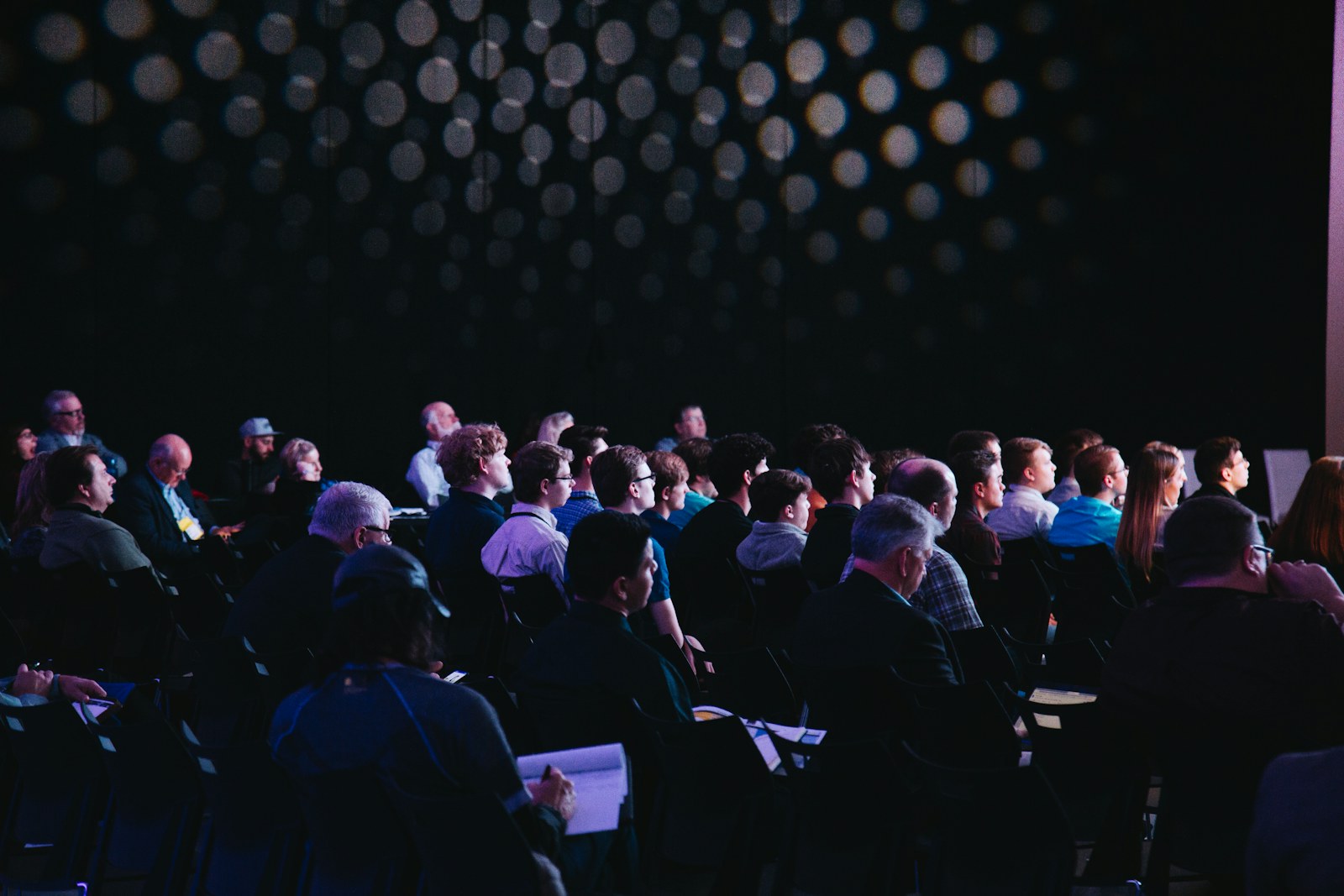
As the months turns to fall, I am always excited about the sports and events calendar that this time of year brings. Once again this year, I had the privilege of participating at the 81st UN General Assembly and delivering the closing remarks at the C3 Davos of Healthcare Summit which marked the kickoff of the UNGA sessions.
As my colleagues dove into the day's topics—translational research, drug development, clinical trials, AI, biotechnology, moving promising ideas into care—I thought of how far we've come at this particular meeting and global healthcare in general and of course I thought of my late dear friend, the incomparable mentor, Dr. Mohan Chellappa, to whom I once again dedicated my closing remarks.
Mohan was a true visionary who understood the fundamental power of collaboration. He believed in us—and he never stopped reminding us that yes, institutions, technology and infrastructure are all vitally important but only people can create the trust that moves the work across borders to patients. He was firm but kind and his faith in his colleagues was unshakable. Mohan was also the original "tech bro" and as a surgeon, he had a voracious curiosity about new ideas and technology. But always, he brought us back to the question that matters: How does this actually help patients and how soon can we get it to them?
Along with giving us a great opportunity to be together, the C3 Summit is an excellent window into how our field is evolving. In the summit's early years, much of our conversation centered on affiliations between hospitals and academic medical centers—how to form those relationships and sustain them. Today, those affiliations have matured into broader innovation networks. At their best, those networks bring real benefit to patients but they also raise a deceptively simple question: Is the race to cure disease best served by collaboration or competition?
Wisdom and necessity dictate the answer: it takes both. Competition creates urgency. It challenges us to test our assumptions, to move faster. But since there is no laboratory, company, health system or country that possesses every capability necessary to move an idea safely and expeditiously from discovery to a patient's bedside, we need collaboration to keep the work moving.
How does that actually happen? For years, we conceived of innovation as a linear progression: discovery, clinical research, adoption and finally globalization. It is a fine model, but it no longer reflects the world around us. In our hyper‑connected reality, innovation rarely travels neatly from one stage to the next. The variables are too numerous and unpredictable. What is emerging instead is a more iterative process in which clinical needs, research, technology, investment, regulation and implementation continually inform one another. Physicians can't wait at the end of the pipeline to adopt an innovation: they help shape the questions at the beginning, test whether an idea addresses a real unmet need and refine it as evidence and experience accumulate.
In a 2010 piece for the Times, Thomas Friedman profiled a medical‑device startup called EndoStim. The company was terrific at bringing together talent, capital, engineering and clinical insight from multiple countries. EndoStim's story still resonates because it tapped into the power of global innovation. In retrospect, however, Friedman's prescient essay was missing a crucial element: the academic medicine enterprise.
In the ensuing years, we've learned that academic medical centers are the indispensable vector for patient‑centered innovation. We are uniquely positioned to merge discovery, clinical expertise and patient care. Researchers work with physicians who understand the patient and the disease, know how care is actually delivered and see in real time which treatments work and which fall short. The teams design better studies, conduct rigorous clinical trials, refine an innovation as evidence develops and generate the proof that physicians, regulators and health systems need before the innovation can become care. Industry brings engineering, investment and scale. Global partners help determine whether an innovation fits their patients, systems and cultures.
My Cedars‑Sinai colleague Dr. Barham Abu Dayyeh, Executive Director and Associate Dean of Innovation, puts it best: "The best innovation comes from people in the trenches who have their fingers on the pulse of truly unmet patient needs." Physicians identify the right problems, distinguish promising ideas from merely interesting ones and keep the work focused on outcomes that matter.
The model that is now emerging aims to make the process even more fluid and responsive. Academic medicine, industry, government, entrepreneurs and local healthcare partners are working together earlier in the process, bringing the right people together from the start to test ideas against clinical reality, refine them as evidence develops and prepare them for adoption in different healthcare systems. This is the practical meaning of an integrative model of innovations: not a straight line from discovery to delivery, but a cycle of learning and improvement. And when it works, the avoidable delays between discovery and application are circumvented.
We are seeing the positive impacts of this cycle. For example, GLP‑1 medicines have changed the treatment of obesity and Type 2 diabetes for millions of people, while also prompting new questions about long-term care, access and how physicians can best support patients using them. More recently, the FDA approved a first-in-class targeted therapy for metastatic pancreatic cancer. In a disease that has historically offered patients few options, the treatment extended median overall survival in a clinical trial from 6.7 months with standard chemotherapy to 13.2 months with the new therapy. More time, more choices and more hope for patients and their families.
Connectivity is at the heart of our work at Cedars‑Sinai International. Our physician-innovators and researchers collaborate with other healthcare institutions, governments, industry and clinical colleagues around the world. We listen, build with our partners and adapt the work to local needs. This helps good ideas withstand scrutiny, become stronger and reach patients in ways that make sense for their communities.
Our growing global presence, including Cedars‑Sinai Clinic London, allows us to offer high‑touch care while building relationships that help us understand local needs and opportunities. We are focused not only on treating illness, but also on delivering wellness: bringing the latest advances to people so they can live better and healthier lives.
These changes are happening in a world that is divided and uncertain. Globalization is clearly under pressure. However, healthcare continues to remind us how deeply connected we all are. The C3 Summit shows us the next frontier: a more fluid and integrative model of innovation that harnesses the power of academic medicine to move promising discoveries toward patients with greater speed.
As I look ahead to the future, I'm more confident than ever that we will keep accelerating the translation of promising ideas into better, more timely care. Our patients and their families are counting on us. We owe it to them—and to ourselves—to keep them at the center of our work.
As the months turns to fall, I am always excited about the sports and events calendar that this time of year brings. Once again this year, I had the privilege of participating at the 81st UN General Assembly and delivering the closing remarks at the C3 Davos of Healthcare Summit which marked the kickoff of the UNGA sessions.
As my colleagues dove into the day's topics—translational research, drug development, clinical trials, AI, biotechnology, moving promising ideas into care—I thought of how far we've come at this particular meeting and global healthcare in general and of course I thought of my late dear friend, the incomparable mentor, Dr. Mohan Chellappa, to whom I once again dedicated my closing remarks.
Mohan was a true visionary who understood the fundamental power of collaboration. He believed in us—and he never stopped reminding us that yes, institutions, technology and infrastructure are all vitally important but only people can create the trust that moves the work across borders to patients. He was firm but kind and his faith in his colleagues was unshakable. Mohan was also the original "tech bro" and as a surgeon, he had a voracious curiosity about new ideas and technology. But always, he brought us back to the question that matters: How does this actually help patients and how soon can we get it to them?
Along with giving us a great opportunity to be together, the C3 Summit is an excellent window into how our field is evolving. In the summit's early years, much of our conversation centered on affiliations between hospitals and academic medical centers—how to form those relationships and sustain them. Today, those affiliations have matured into broader innovation networks. At their best, those networks bring real benefit to patients but they also raise a deceptively simple question: Is the race to cure disease best served by collaboration or competition?
Wisdom and necessity dictate the answer: it takes both. Competition creates urgency. It challenges us to test our assumptions, to move faster. But since there is no laboratory, company, health system or country that possesses every capability necessary to move an idea safely and expeditiously from discovery to a patient's bedside, we need collaboration to keep the work moving.
How does that actually happen? For years, we conceived of innovation as a linear progression: discovery, clinical research, adoption and finally globalization. It is a fine model, but it no longer reflects the world around us. In our hyper‑connected reality, innovation rarely travels neatly from one stage to the next. The variables are too numerous and unpredictable. What is emerging instead is a more iterative process in which clinical needs, research, technology, investment, regulation and implementation continually inform one another. Physicians can't wait at the end of the pipeline to adopt an innovation: they help shape the questions at the beginning, test whether an idea addresses a real unmet need and refine it as evidence and experience accumulate.
In a 2010 piece for the Times, Thomas Friedman profiled a medical‑device startup called EndoStim. The company was terrific at bringing together talent, capital, engineering and clinical insight from multiple countries. EndoStim's story still resonates because it tapped into the power of global innovation. In retrospect, however, Friedman's prescient essay was missing a crucial element: the academic medicine enterprise.
In the ensuing years, we've learned that academic medical centers are the indispensable vector for patient‑centered innovation. We are uniquely positioned to merge discovery, clinical expertise and patient care. Researchers work with physicians who understand the patient and the disease, know how care is actually delivered and see in real time which treatments work and which fall short. The teams design better studies, conduct rigorous clinical trials, refine an innovation as evidence develops and generate the proof that physicians, regulators and health systems need before the innovation can become care. Industry brings engineering, investment and scale. Global partners help determine whether an innovation fits their patients, systems and cultures.
My Cedars‑Sinai colleague Dr. Barham Abu Dayyeh, Executive Director and Associate Dean of Innovation, puts it best: "The best innovation comes from people in the trenches who have their fingers on the pulse of truly unmet patient needs." Physicians identify the right problems, distinguish promising ideas from merely interesting ones and keep the work focused on outcomes that matter.
The model that is now emerging aims to make the process even more fluid and responsive. Academic medicine, industry, government, entrepreneurs and local healthcare partners are working together earlier in the process, bringing the right people together from the start to test ideas against clinical reality, refine them as evidence develops and prepare them for adoption in different healthcare systems. This is the practical meaning of an integrative model of innovations: not a straight line from discovery to delivery, but a cycle of learning and improvement. And when it works, the avoidable delays between discovery and application are circumvented.
We are seeing the positive impacts of this cycle. For example, GLP‑1 medicines have changed the treatment of obesity and Type 2 diabetes for millions of people, while also prompting new questions about long-term care, access and how physicians can best support patients using them. More recently, the FDA approved a first-in-class targeted therapy for metastatic pancreatic cancer. In a disease that has historically offered patients few options, the treatment extended median overall survival in a clinical trial from 6.7 months with standard chemotherapy to 13.2 months with the new therapy. More time, more choices and more hope for patients and their families.
Connectivity is at the heart of our work at Cedars‑Sinai International. Our physician-innovators and researchers collaborate with other healthcare institutions, governments, industry and clinical colleagues around the world. We listen, build with our partners and adapt the work to local needs. This helps good ideas withstand scrutiny, become stronger and reach patients in ways that make sense for their communities.
Our growing global presence, including Cedars‑Sinai Clinic London, allows us to offer high‑touch care while building relationships that help us understand local needs and opportunities. We are focused not only on treating illness, but also on delivering wellness: bringing the latest advances to people so they can live better and healthier lives.
These changes are happening in a world that is divided and uncertain. Globalization is clearly under pressure. However, healthcare continues to remind us how deeply connected we all are. The C3 Summit shows us the next frontier: a more fluid and integrative model of innovation that harnesses the power of academic medicine to move promising discoveries toward patients with greater speed.
As I look ahead to the future, I'm more confident than ever that we will keep accelerating the translation of promising ideas into better, more timely care. Our patients and their families are counting on us. We owe it to them—and to ourselves—to keep them at the center of our work.