
Cedars‑Sinai opened its Mexico City office—the medical center's first international location—in 2004, immediately working to establish enduring relationships with the country's Jewish, Lebanese and other communities. Over nearly 20 years, those relationships have flourished, and growing numbers of Mexican patients have traveled to Cedars-Sinai for a broad range of treatments that have improved outcomes and saved lives.
"Healthcare has become increasingly global, but it also remains deeply local, and our work in Mexico City enables us to bring patients and their families the world‑class care they deserve," Dr. Slavin said. "We have been caring for L.A. since 1902—almost 125 years—and we intend to continue serving Mexico City for many decades to come, as well."
https://www.cedars-sinai.org/international-stories/leadership-visit-to-mexico.html
Learn more about Cedars-Sinai Clinic London: https://bit.ly/4dDZl2a
Website: https://www.cedars-sinai.co.uk/home.html
Instagram: https://www.instagram.com/cedarssinaicliniclondon/
Learn more about his journey:
https://cedars-sinai.info/patient-story/
Bringing world-class care closer to you, Cedars-Sinai continues to expand its global locations through regional offices, in-market affiliations as well as strategic and academic collaborations.
It started with an exciting and busy work week in Europe. The first law of global health never changes: We learn best when we learn from each other. London, Geneva and Madrid each had a story to tell about the current state of healthcare in the United Kingdom and Europe, where old systems are straining and market‑responsive models are emerging.
My first stop was London for the board meeting of our newly established Cedars‑Sinai clinic in London and meetings with our partners at Guy’s and St Thomas’ NHS Foundation Trust. Our Cedars‑Sinai clinic on Wimpole Street is now fully operational and the state-of-the-art flagship facility is on schedule to open next spring in the Harley Street Health District.
We had invigorating conversations about the future with leadership across London. It was my privilege to meet Amanda Pritchard, the new chief executive of Guy’s and St Thomas, who until recently led NHS England. Her message was candid: The public system remains the bedrock of British healthcare, but to remain viable it needs sustainable new revenue streams and elevated clinical offerings. She and her colleagues don’t view private care as a threat. Instead, done thoughtfully and in partnership, it will be part of the answer.
This was music to our ears. Cedars‑Sinai International’s goal is to complement the NHS, not compete with it.
From London, I flew to Geneva for the International Hospital Federation’s (IHF) World Hospital Congress. The IHF was created almost 100 years ago and has been historically quite Eurocentric. No longer. Under the leadership of CEO Ron Lavater, an American with deep experience at HCA Healthcare and Johns Hopkins Medicine and in the United Arab Emirates health sector, the IHF has gone increasingly global.
The energy at this year’s congress was fantastic, with delegates from six continents, Gulf institutions playing leading roles and a program that blended rigorous academic exchange with practical problem‑solving. I was on a patient-centered care panel with European hospital leaders and a patient advocate. They described the challenging realities on the ground—long waiting lists, workforce exhaustion, budget pressures—yet the room was alive with optimism. People are no longer just describing problems; they are working together to create solutions. IHF is championing the global nature of 21st century healthcare and navigating its headwinds.
Madrid was electrifying. If London is carefully recalibrating and Geneva is taking stock, Madrid is surging forward. Globalization and post‑pandemic realities have intensified expectations for service, speed and experience in healthcare. Private capital is flowing in to create new hospitals and clinics.
Through luck, serendipity and maybe a bit of planning, my life these days is filled with global healthcare, brilliant colleagues and football (all kinds), of course. My stay in Madrid was enriched by two legendary European football clubs: Real Madrid and Atlético Madrid. At the Santiago Bernabéu, we were graciously hosted by Anas Laghrari, the strategic right hand of club president Florentino Pérez and widely seen as a future leader of Real Madrid. The club is owned by its 100,000 “socios”—members of the public—and functions as a civic institution as much as a sporting one. Their ambition is far‑reaching: integrating world-class healthcare and wellness into their ecosystem to benefit elite athletes and the broader community. The following day, we met with the leadership of Atlético Madrid, including the club’s long-serving medical director José Maria Villalón, who also cares for the Spanish national team. We spoke about the importance of health and wellness for the community beyond elite athletes, as well as the critical need for more rigorous standards and accreditation in sports medicine.
Those two days left me on cloud nine. The conversations with these two legendary organizations revolved around creating high‑value, high-touch care for athletes who routinely travel the globe and then bringing that level of excellence to everyday patients.
Madrid gave me a kinetic reminder of how interconnected our world has become. The U.S. National Football League took over the Bernabéu for a regular‑season game between the Washington Commanders and the Miami Dolphins during our stay. As a crazed fan of both American football and soccer, it was downright thrilling to watch the American gladiators churn up the same turf where Kylian Mbappé and Vinícius Jr. dance.
Europe is undergoing a tectonic shift in the relationship between public and private healthcare. Leaders in public systems who once viewed private medicine with suspicion are now asking how they can harness private innovation and investment without diminishing the physician‑patient relationship or sacrificing institutional equity. Purely corporate models will not be the answer. Sooner or later, unfettered profit-seeking erodes trust. Public systems are looking for allies, not adversaries.
Cedars‑Sinai International believes in collaboration. We listen with care to local physicians, nurses and patients and then offer clinical expertise, operational rigor and patient‑centric systems that measure success by the benefits they provide to the people in our care. In London, we work inside the NHS system. In Madrid, we are exploring how an academic medical center rooted in compassionate, physician-led care could produce something entirely new for a global sporting community.
Every trip I take shows me that the future of global healthcare doesn’t belong to any single country or model. It belongs to those who are willing to cross barriers—geographic, cultural, ideological—with open minds and hearts and a genuine desire to serve patients.
When I returned to Los Angeles, I felt grateful for the tireless colleagues who travel these roads with me and our partners around the world, who keep teaching us what excellence looks like in different cultures. We’re on a vital path together. Healthcare is becoming more collaborative, more patient‑centered and more human. It’s a new day.
Probably against my better judgement, I've been scrolling through the news lately and, like almost everyone I know, I’m uneasy. Geopolitical tensions are flaring and wars rage, markets are unpredictable, technology surges ahead, often for the better, sometimes not. All in all, there’s a level of volatility I haven’t seen in my more than 20 years in global healthcare. When I remind myself to step back and take a few deep breaths, three threads emerge: the chaos around us, the enduring pull of globalization and the phenomenal resilience of global healthcare.
First thread: the chaos. I remember 9/11 vividly. I was a surgery resident in the ICU. We cared for our patients as TVs blared the unfolding horror. My wife and I, both young doctors with a toddler in daycare, worried about our family's safety and where the world was headed. I was already thinking internationally, and the shockwaves were hitting everywhere. Then came the 2008 financial crisis. Headlines sounded the alarm that healthcare as we knew it, especially in developing places like the UAE and broader GCC, would be radically destabilized. After all, the world economy was crumbling, wasn’t it? How could health systems survive?
I’m grateful to say that health systems didn’t just survive, they thrived. From 2010 to 2015, dynamism surged in the GCC. China felt like the next great frontier for collaboration fueled by massive investments, international partnerships and turbocharged innovation. Asia was buzzing. Then, in rapid succession, the populist wave hit, pushback on globalization grew loud, COVID‑19 locked us all down and every system was tested to its limits.
Volatility. Chaos. Dynamism.
The second thread: globalization and its fundamental resilience. Despite the pushback, the long‑term trajectory has been upward. Humans are more connected than ever. No amount of regionalization in business, politics or otherwise is going to unwind that. Partnerships are forming, trade is flowing, ideas cross borders, and supply chains link us. Amid retrenchment and uncertainty, globalization continues. This is 2026, after all. We are the world.
Here is where the third thread, global healthcare, comes alive for me. Through all the upheavals, healthcare keeps advancing. Do we have perfect systems? No. But in spite of the chaos, we've all stayed remarkably resilient. Wars, recessions, pandemics: We outlast them all. Our work is resistant to natural disasters and man‑made ones alike. Post-9/11, health systems adapted and grew. The financial crisis? Healthcare boomed. Populism and COVID-19? We innovated vaccines at warp speed, shared data globally and kept hospitals running. Today, cross-cultural synergy is growing and AI and data analytics are transforming medicine. We're not just treating sickness anymore. We're wrapping our arms around wellness and our ultimate goal: keeping people and communities healthy. Healthcare's universality transcends divides. It draws in expertise and challenges our biases and preconceptions. That plays out every day at Cedars-Sinai International and in our partnerships that merge public and private models and blend academic rigor with local insight. Partnerships adjust. Models evolve. Healthcare inspires collaboration.
I saw that resilience firsthand on my recent trip to Asia. In China, geopolitical tensions with the U.S. are acute, but healthcare collaboration has not deteriorated. It has evolved. Cedars‑Sinai’s partnership at Shenzhen Qianhai Taikang Hospital, now in its 18th month since hospital opening, is a textbook study in pragmatic adaptation. Initially positioned as a U.S.-branded international hub, Taikang leadership has shifted the hospital to a more regional focus, drawing patients from Hong Kong, Macau and the region while keeping its international aspirations alive and ready for a reconnected future. Government investments are pouring into public hospitals as the country turns inward, yet private players like Taikang are not retreating. They are regionalizing smartly, blending local trust with global know-how. The headlines shout tension, but collaboration endures. The glow of global synergy may have dimmed for now, but clinicians keep learning from one another, systems still improve with shared expertise and, most importantly, patients continue to benefit.
In Vietnam, there’s momentum everywhere. This vibrant nation of 100 million people is booming with private healthcare energy, positioning itself as an alternative to China and Thailand. The rapidly growing private healthcare sector is finding its footing, fueled by local vision and global collaboration. In Ho Chi Minh City, new providers are blending international expertise with deeply rooted local leadership. They’re distinctly Vietnamese, built for their own communities, yet informed by global standards. Thanks to an introduction by Apex, our Qatari partners, and U.K.‑based investor Real Capital London, I had an opportunity to see these ecosystems taking shape. A clinic is already up and running and land has been secured in Saigon's emerging financial district for a major hospital, with Apex and Cedars-Sinai positioned to provide specialized expertise to serve local and traveling patients.
In its own way, Japan, with its family‑run legacies like the Kameda Medical Group (in continuous operation since 1644, with a century-old hospital in Chiba and a high-end clinic in Ginza, Tokyo), is expanding. While continuing to honor their patients’ propensity to be seen by Japanese doctors, Kameda is working with U.S. systems like the Global Healthcare Accreditation and Medical Tourism Association network to tap medical travel and exchange knowledge and attract regional and international patients. They are staying true to their heritage as they elevate their excellence through collaboration with global brands like Cedars-Sinai.
Healthcare's strength lies in its humanity. Public systems strained by waiting lists and budgets are turning to new partnerships for innovation without losing their core equity. Private players are succeeding when they prioritize patients over pure profit, building trust through physician‑led, compassionate care. We're crossing geographic, cultural and ideological barriers because patients need and demand quality and excellence. Wellness initiatives are shifting us from reactive to proactive, fostering healthier communities even as the world churns. AI promises precision medicine tailored to individuals, predictive tools to prevent disease and data platforms that connect providers worldwide.
So yes, the chaos feels unprecedented, but healthcare keeps rising above the cacophony, and as long as we stay true to our common mission to bring collaborative, human‑centered healthcare to the world, we will keep rising. Despite all the turbulence, we live in astonishing times. I'm endlessly energized by our shared mission and grateful for the colleagues and partners across six continents who make it all possible. We're on this path together. Let's keep moving ahead.
As the months turns to fall, I am always excited about the sports and events calendar that this time of year brings. Once again this year, I had the privilege of participating at the 81st UN General Assembly and delivering the closing remarks at the C3 Davos of Healthcare Summit which marked the kickoff of the UNGA sessions.
As my colleagues dove into the day's topics—translational research, drug development, clinical trials, AI, biotechnology, moving promising ideas into care—I thought of how far we've come at this particular meeting and global healthcare in general and of course I thought of my late dear friend, the incomparable mentor, Dr. Mohan Chellappa, to whom I once again dedicated my closing remarks.
Mohan was a true visionary who understood the fundamental power of collaboration. He believed in us—and he never stopped reminding us that yes, institutions, technology and infrastructure are all vitally important but only people can create the trust that moves the work across borders to patients. He was firm but kind and his faith in his colleagues was unshakable. Mohan was also the original "tech bro" and as a surgeon, he had a voracious curiosity about new ideas and technology. But always, he brought us back to the question that matters: How does this actually help patients and how soon can we get it to them?
Along with giving us a great opportunity to be together, the C3 Summit is an excellent window into how our field is evolving. In the summit's early years, much of our conversation centered on affiliations between hospitals and academic medical centers—how to form those relationships and sustain them. Today, those affiliations have matured into broader innovation networks. At their best, those networks bring real benefit to patients but they also raise a deceptively simple question: Is the race to cure disease best served by collaboration or competition?
Wisdom and necessity dictate the answer: it takes both. Competition creates urgency. It challenges us to test our assumptions, to move faster. But since there is no laboratory, company, health system or country that possesses every capability necessary to move an idea safely and expeditiously from discovery to a patient's bedside, we need collaboration to keep the work moving.
How does that actually happen? For years, we conceived of innovation as a linear progression: discovery, clinical research, adoption and finally globalization. It is a fine model, but it no longer reflects the world around us. In our hyper‑connected reality, innovation rarely travels neatly from one stage to the next. The variables are too numerous and unpredictable. What is emerging instead is a more iterative process in which clinical needs, research, technology, investment, regulation and implementation continually inform one another. Physicians can't wait at the end of the pipeline to adopt an innovation: they help shape the questions at the beginning, test whether an idea addresses a real unmet need and refine it as evidence and experience accumulate.
In a 2010 piece for the Times, Thomas Friedman profiled a medical‑device startup called EndoStim. The company was terrific at bringing together talent, capital, engineering and clinical insight from multiple countries. EndoStim's story still resonates because it tapped into the power of global innovation. In retrospect, however, Friedman's prescient essay was missing a crucial element: the academic medicine enterprise.
In the ensuing years, we've learned that academic medical centers are the indispensable vector for patient‑centered innovation. We are uniquely positioned to merge discovery, clinical expertise and patient care. Researchers work with physicians who understand the patient and the disease, know how care is actually delivered and see in real time which treatments work and which fall short. The teams design better studies, conduct rigorous clinical trials, refine an innovation as evidence develops and generate the proof that physicians, regulators and health systems need before the innovation can become care. Industry brings engineering, investment and scale. Global partners help determine whether an innovation fits their patients, systems and cultures.
My Cedars‑Sinai colleague Dr. Barham Abu Dayyeh, Executive Director and Associate Dean of Innovation, puts it best: "The best innovation comes from people in the trenches who have their fingers on the pulse of truly unmet patient needs." Physicians identify the right problems, distinguish promising ideas from merely interesting ones and keep the work focused on outcomes that matter.
The model that is now emerging aims to make the process even more fluid and responsive. Academic medicine, industry, government, entrepreneurs and local healthcare partners are working together earlier in the process, bringing the right people together from the start to test ideas against clinical reality, refine them as evidence develops and prepare them for adoption in different healthcare systems. This is the practical meaning of an integrative model of innovations: not a straight line from discovery to delivery, but a cycle of learning and improvement. And when it works, the avoidable delays between discovery and application are circumvented.
We are seeing the positive impacts of this cycle. For example, GLP‑1 medicines have changed the treatment of obesity and Type 2 diabetes for millions of people, while also prompting new questions about long-term care, access and how physicians can best support patients using them. More recently, the FDA approved a first-in-class targeted therapy for metastatic pancreatic cancer. In a disease that has historically offered patients few options, the treatment extended median overall survival in a clinical trial from 6.7 months with standard chemotherapy to 13.2 months with the new therapy. More time, more choices and more hope for patients and their families.
Connectivity is at the heart of our work at Cedars‑Sinai International. Our physician-innovators and researchers collaborate with other healthcare institutions, governments, industry and clinical colleagues around the world. We listen, build with our partners and adapt the work to local needs. This helps good ideas withstand scrutiny, become stronger and reach patients in ways that make sense for their communities.
Our growing global presence, including Cedars‑Sinai Clinic London, allows us to offer high‑touch care while building relationships that help us understand local needs and opportunities. We are focused not only on treating illness, but also on delivering wellness: bringing the latest advances to people so they can live better and healthier lives.
These changes are happening in a world that is divided and uncertain. Globalization is clearly under pressure. However, healthcare continues to remind us how deeply connected we all are. The C3 Summit shows us the next frontier: a more fluid and integrative model of innovation that harnesses the power of academic medicine to move promising discoveries toward patients with greater speed.
As I look ahead to the future, I'm more confident than ever that we will keep accelerating the translation of promising ideas into better, more timely care. Our patients and their families are counting on us. We owe it to them—and to ourselves—to keep them at the center of our work.
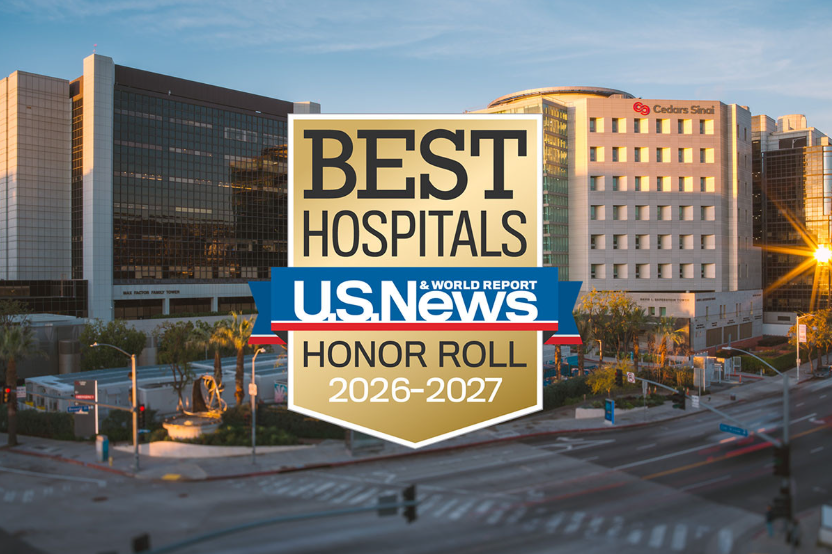
The U.S. News rankings, released Tuesday, are based on patient outcomes, patient experience, ability to handle complex medical conditions and a variety of other health-related measures.
The rankings signal to international patients that Cedars-Sinai meets rigorous standards for clinical excellence, research and innovation, providing further assurance that patients will receive world-class care from a trusted, globally recognized institution.
"Being ranked among the best hospitals in the U.S. for 11 consecutive years reflects our consistent commitment to providing patients with excellent clinical care and access to transformational research," said Heitham Hassoun, MD, chief executive of Cedars-Sinai International. “We will continue bringing Cedars-Sinai's innovation and top-ranked care closer to our patients wherever they are around the globe.”
U.S. News selects the top-performing hospitals for the Honor Roll based on their high rankings and ratings in multiple specialties, procedures and conditions.
Ten Cedars-Sinai specialties made the list of top clinical programs in the U.S. Three of the specialties were ranked in the top five:
Cardiology, Heart & Vascular SurgeryGastroenterology & GI SurgeryOrthopedics
Other top-ranked specialties in the U.S. included Cancer; Diabetes & Endocrinology; Geriatrics; Neurology & Neurosurgery; Obstetrics & Gynecology; Pulmonology & Lung Surgery; and Urology.
Since joining Cedars-Sinai in 2018, Dr. Hassoun plays a central role in extending the organization’s global healthcare impact, including guiding its first international partnership in Qatar and leading initiatives in regions such as China, Ecuador, Indonesia, South Korea, and the UAE. In addition to his executive leadership, he serves as a professor of Surgery and contributes to efforts focused on international patient care, health system partnerships, and humanitarian initiatives.
Cedars-Sinai is proud to engage with partners across the Kingdom to support this progress through collaboration, knowledge exchange, education, and clinical excellence. Together, we aim to help build resilient and sustainable health systems that expand access to world-class care for communities across the region.
With a reputation for excellence, Cedars-Sinai serves over 2,000 patients from more than 100 countries annually. The nonprofit academic medical center is renowned for its cutting-edge facilities, advanced treatments, and a multidisciplinary approach that provides comprehensive care. Supported by over 4,500 physicians and nurses and 1,500 active research projects, Cedars-Sinai is consistently recognized on the U.S. News & World Report Honor Roll for “Best Hospitals.”
The GHA accreditation is based on international standards developed with global experts and endorsed by the International Society for Quality in Health Care External Evaluation Association (ISQua EEA). A rigorous three-day evaluation by GHA surveyors included staff interviews, patient feedback, and inspections of treatment areas, along with assessments of cultural competency, patient safety, leadership, and ethical practices.
Dr. Heitham Hassoun, chief executive of Cedars-Sinai International, emphasized that the accreditation reflects the organization’s commitment to improving the medical travel experience. GHA CEO Renée-Marie Stephano highlighted that Cedars-Sinai’s achievement distinguishes it as a global leader in medical travel, providing a benchmark for quality care and patient-centered services in today’s competitive healthcare landscape.
The Singapore office will focus on providing international patients with access to Cedars-Sinai specialists in cardiology, oncology, neurology, and other areas. The office will assist patients and their families seeking care in Los Angeles by offering local support and facilitating connections with Cedars-Sinai experts.
Dr. Robert Figlin, deputy director of Cedars-Sinai Cancer, highlighted the importance of continuity of care for international patients. By engaging with patients in their home communities, the office aims to create personalized treatment plans and improve outcomes for complex cases, working closely with local physicians to ensure seamless care coordination.
The Singapore office, located in the Novena medical hub, is led by Steven Tucker, MD, an experienced American oncologist who has practiced in Singapore for nearly 20 years. This office will also foster collaboration and knowledge-sharing between Cedars-Sinai clinicians and Southeast Asian medical professionals. Cedars-Sinai already operates offices in Mexico City and Shanghai, with plans for further expansion in Qatar, Ecuador, and other regions.
Cedars-Sinai has been recognized for nine years in a row on the “Best Hospitals” Honor Roll by U.S. News & World Report. Cedars-Sinai’s sterling reputation and world-class services make it a leading destination for patients worldwide. The U.S. News & World Report rankings place Cedars-Sinai among the top hospitals in the U.S. in multiple healthcare specialties, including: Cardiology, Heart & Vascular Surgery; Gastroenterology & GI Surgery; Diabetes & Endocrinology; Neurology & Neurosurgery; Obstetrics & Gynecology; Orthopedics; and Pulmonology & Lung Surgery.
Discover what makes Cedars-Sinai a global destination for world-class healthcare and learn how our Cedars-Sinai International team can connect you with the care you need, no matter where life takes you.
Since 1902, Cedars-Sinai has been a leader in delivering exceptional healthcare, combining cutting-edge technology, research, and patient-centered care. We proudly serve one of the most diverse regions in the world, setting benchmarks in quality, education, and community service.
Today, Cedars-Sinai is shaping the future of healthcare by pioneering new treatments, training the next generation of medical professionals, and improving the lives of our most vulnerable community members.
Let us help you achieve your health goals—wherever you are.

Cedars-Sinai is a nonprofit academic medical center and a $8 billion integrated healthcare organization, serving more than 1 million people each year in over 250 locations throughout Los Angeles and Southern California. With more than 4,500 physicians and nurses—as well as 1,500 active research projects—Cedars-Sinai welcomes over 2,000 patients from over 100 countries every year for their medical care.
Cedars-Sinai has been recognized for eleven years in a row on the “Best Hospitals” Honor Roll by U.S. News & World Report. Cedars-Sinai’s sterling reputation and world-class services make it a leading destination for patients worldwide. As a global leader in healthcare, Cedars-Sinai offers a full range of services to patients from around the world. With passion, skill and integrity, Cedars-Sinai provides patients with access to excellence in healthcare—wherever they may be.
Cedars-Sinai's commitment to excellence extends beyond Los Angeles through its growing international presence and dedication to global collaboration.
A major milestone in this journey was the launch of Cedars-Sinai Clinic London, the organization's first wholly owned outpatient clinic outside the U.S. Located in London's renowned Harley Street Health District, the Clinic serves as a regional hub for patients in the U.K. and for global travelers. It provides high-quality primary care, executive health, concierge medicine, and seamless access to Cedars-Sinai specialists in Los Angeles.
Beyond London, Qatar, and its growing global network, Cedars-Sinai continues to expand its international footprint through offices in Mexico, Ecuador, Singapore, and China, alongside physician partnerships and medical education programs that strengthen clinical collaboration, foster knowledge exchange, and expand access to world-class care.